

OMHVN
T393 - Dutch Slave Model Ship
T393 - Dutch Slave Model Ship
This Dutch slave ship represents the vessels used by European trading companies during the 17th–18th centuries, a period when maritime expansion played a central role in global trade routes and colonial history. These ships were designed for long transoceanic voyages, combining cargo transport with complex onboard structures.
Each model is meticulously handcrafted from scratch by master craftsmen using historical photographs, drawings, and original ship plans. Built precisely to scale from premium hardwoods such as western red cedar, rosewood, and mahogany, every piece is entirely hand-built using the traditional plank-on-frame construction method – the same principle employed in real shipbuilding. Completing a single model requires hundreds of hours of skilled labor and a strict quality control process before it leaves the workshop.
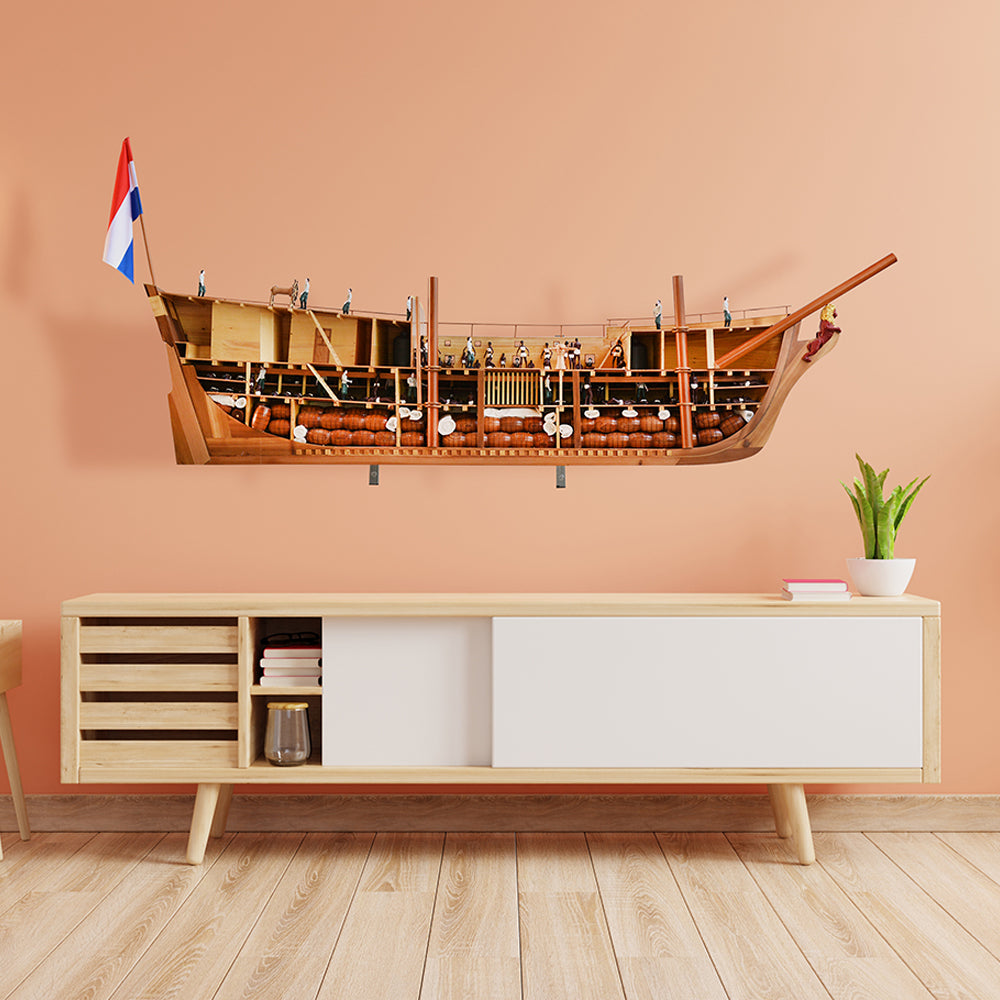
This cutaway model reveals exceptional interior detailing, including multiple deck levels, crew quarters, staircases, storage barrels, and lifelike miniature figures that bring the vessel’s structure and daily operations to life. The exposed hull construction highlights the internal framework, while features such as the bowsprit, mast structures, national flag, and decorative figurehead emphasize historical authenticity and craftsmanship.
A striking and educational display piece, perfect for home decor, offices, museums, libraries, or collectors seeking a historically significant maritime model.
History
Dutch slave ships were central to the Netherlands’ role in the transatlantic slave trade from the 17th to the 19th century. Operated by companies like the Dutch West India Company, these vessels transported enslaved Africans to colonies in the Americas. Built for long ocean crossings, they carried large human cargo under brutal and overcrowded conditions.
Despite their economic importance to colonial powers, Dutch slave ships became symbols of immense suffering. Many voyages faced disease, resistance, and high mortality rates. As abolition movements grew, the trade declined and was officially banned in the 19th century. Today, the history of these ships serves as a stark reminder of the human cost of slavery and colonial expansion.
SKU:
View full details